
Our Montessori Approach
At TIMS, Montessori education gives children the freedom to explore within a carefully prepared environment. Teachers guide each child with respect, observation and trust in their natural desire to learn.
Learning through purposeful independence
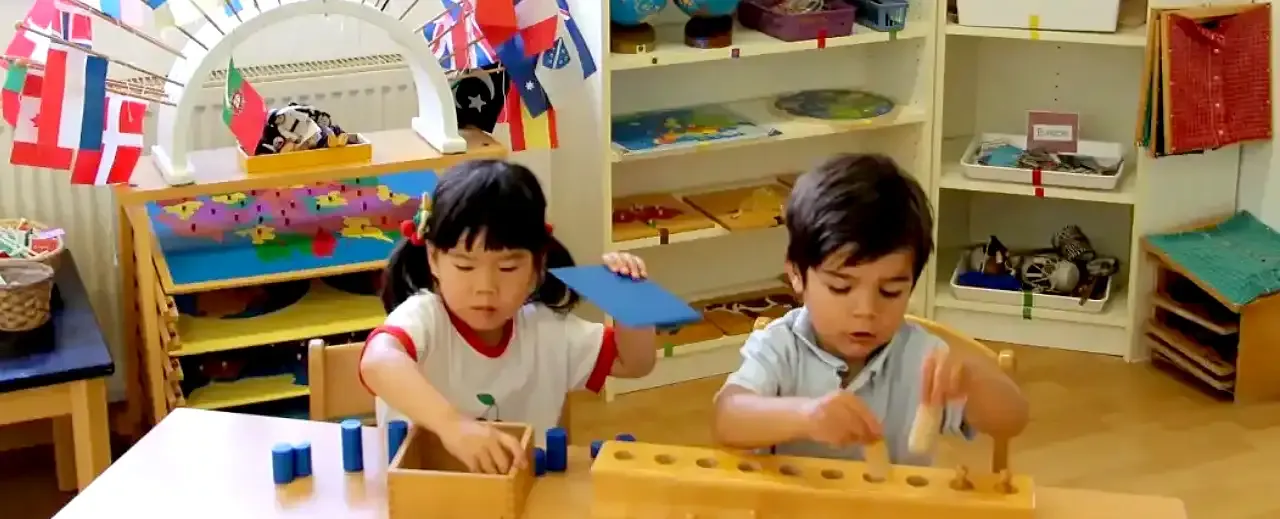
Montessori education recognises that children learn deeply when they can choose meaningful work, repeat activities, make discoveries and correct mistakes independently. At TIMS, classrooms are prepared with materials that invite concentration, movement, language, problem-solving and practical life skills.
The prepared environment
Every material has a purpose and a place. Children learn to choose work, use it carefully, return it for the next child and build a sense of responsibility for the shared environment.
This structure supports freedom and independence while giving children clear boundaries and routines.
The teacher as guide
Teachers observe each child, notice interests and readiness, introduce materials and step back so children can work independently. This respectful guidance helps children develop confidence and intrinsic motivation.
Self-correcting materials
Many Montessori materials include a built-in control of error. This means children can notice and correct mistakes themselves, without constant adult correction. Over time, this builds perseverance, concentration and problem-solving ability.
What children develop
At a Glance
- Independence and confidence
- Concentration and coordination
- Language and communication
- Mathematical thinking
- Practical life skills
- Respect for others and the environment
- Curiosity and a love of learning